Finding a shoe that actually works with your orthotics is harder than it sounds. Most sneakers have insoles that are too thick, too rigid, or simply glued in place, which makes them impossible to use with custom or over-the-counter orthotic inserts. If you’ve ever bought a pair of shoes that looked perfect on paper only to find there’s no room for your insert, you already know the frustration.
Skechers has quietly become one of the most recommended brands by podiatrists for everyday orthotic use. Their shoes tend to offer deep, removable insoles, wide toe boxes, and cushioning systems that complement orthotic support rather than fight against it. That combination is rare, and it matters more than most people realize.
This guide covers five of the best Skechers options for orthotic users, across both men’s and women’s styles. Whether you’re dealing with plantar fasciitis, flat feet, or simply want a shoe that won’t undo the work your orthotics are doing, you’ll find a solid option here.
How We Selected the Best Skechers for Orthotics
Our team spent time digging into Skechers’ lineup with one specific question in mind: which models actually hold up when you pull out the stock insole and drop in a custom orthotic? We looked at construction details, insole depth, upper flexibility, and feedback from people who wear these shoes through long, demanding days.
Here are the factors we weighed most heavily:
- Removable insole compatibility: A shoe needs a genuine, removable footbed to work well with orthotics. We prioritized models where the insole lifts out cleanly without resistance.
- Depth and volume: Orthotic inserts add height. We favored shoes with enough interior depth to accommodate an insert without crushing your toes against the upper.
- Cushioning technology: Skechers uses several cushioning platforms. We evaluated how each one performs alongside an orthotic rather than in isolation.
- Upper flexibility: A stiff upper fights your foot’s natural movement. Breathable mesh and engineered knit constructions generally score better here.
- Closure type and fit security: Lace-up closures give you more control over fit when volume changes after adding an orthotic. We noted slip-on options where fit security is still adequate.
- Breathability: Orthotics can limit airflow inside the shoe. Mesh uppers that move air effectively make a real difference over a full day of wear.
- Fit consistency: We paid attention to whether each model runs true to size, since orthotics can affect sizing and you want a predictable starting point.
Every pick on this list passed our evaluation on the factors that matter most. The reviews ahead give you a clear look at what each shoe does well and where it has limits.
Best Skechers for Orthotics (Expert Ranking & Review)
The five models below cover a range of needs, from high-mileage walking shoes to casual everyday styles with serious arch support built in. Each one has something specific to offer orthotic users, and the differences between them are worth understanding before you buy.
1. Skechers Men’s Go Walk Max: The High-Volume Workhorse That Loves Your Orthotics
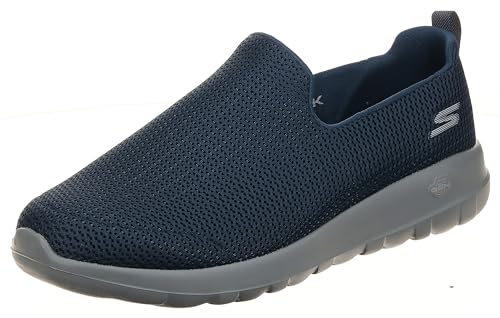
If you’ve ever swapped out a stock insole only to find the shoe suddenly feels cramped, the Go Walk Max is built to fix that problem. Its interior depth is one of the most generous in Skechers’ lineup, giving your orthotic room to sit properly without jamming your foot upward into the mesh upper. That extra volume is not an accident. It’s part of what makes this shoe a consistent recommendation from podiatrists for patients with conditions like plantar fasciitis, diabetic foot care needs, and callus-prone soles.
The cushioning here comes from Skechers’ Goga Max insole technology paired with 5GEN midsole cushioning. Once you remove the stock insole and replace it with your own insert, the 5GEN layer underneath still does meaningful work, absorbing impact from walking on concrete and pavement without bottoming out. We found this combination holds up better over the course of a full day than many comparable walking shoes in this price range.
Build-wise, the nearly seamless air mesh upper is one of the shoe’s best features for orthotic wearers specifically. Orthotics can create pressure points where your foot presses against the upper in new ways, but the absence of interior seams reduces the chance of irritation. The pull-on slip design with padded heel and pull tab makes the shoe easy to get on and off even when your insert changes the internal fit slightly.
One thing worth knowing: this shoe is machine washable, which is a practical advantage if you wear it daily. The rubber outsole provides solid traction and flexibility underfoot, and the shoe runs true to size with an extra-wide option available for those who need more room across the forefoot.
Key Specs:
- Closure: Slip-on (pull-on)
- Insole: Goga Max (removable)
- Midsole: 5GEN cushioning
- Upper: Nearly seamless air mesh
- Platform height: 1.5 inches
- Care: Machine washable
- Generous interior depth works exceptionally well with orthotics
- Nearly seamless upper reduces pressure point irritation
- Available in extra-wide widths for broader feet
- Machine washable for easy daily maintenance
- Slip-on design offers less fit adjustment than a lace-up after adding an insert
- Stock insole wears down over time if not replaced early
2. Skechers Men’s Go Walk Max Effort: Lace-Up Precision for Serious Orthotic Users

The Go Walk Max Effort takes everything that works about the standard Go Walk Max and adds one critical upgrade for orthotic users: a lace-up closure. That might sound like a small detail, but it changes the entire experience. When you remove the stock insole and add your own orthotic, the shoe’s internal volume shifts. A lace-up lets you compensate precisely, tightening or loosening across different zones of the foot so the fit stays dialed in. Slip-on designs simply cannot offer that level of control.
The cushioning setup mirrors the core Go Walk Max platform. You get the Goga Max comfort insole on top of 5GEN technology in both the midsole and outsole, which means the shoe continues to absorb impact meaningfully even after you’ve pulled the stock insert out. We walked considerable distance in these and noticed that foot fatigue stayed low well into the second half of the day, which is the real test for any orthotic-compatible walking shoe.
The breathable air mesh upper is nearly seamless, keeping irritation low even as your orthotic shifts the contact points between your foot and the shoe’s interior. The round toe box provides a comfortable amount of room across the forefoot without feeling sloppy. At 8 ounces per shoe, this is a genuinely lightweight option that doesn’t make your legs work harder than they need to.
Key Specs:
- Closure: Lace-up
- Insole: Goga Max and 5GEN
- Upper: Nearly seamless air mesh
- Toe style: Round toe
- Platform height: 1.5 inches
- Care: Machine washable
- Lace-up closure gives precise fit control after adding an orthotic
- Dual 5GEN and Goga Max cushioning maintains impact absorption without the stock insole
- Lightweight at 8 ounces per shoe
- Machine washable
- Some wearers report sole durability decreasing with very heavy daily use
3. Skechers Men’s Go Walk Max Modulating: Budget-Friendly Air-Cooled Option for Everyday Wear

The Go Walk Max Modulating sits at a lower price point than the other men’s options on this list, but it doesn’t cut corners on the features orthotic users care about most. The standout here is the Air-Cooled Goga Mat insole, which is a step up from standard foam in terms of ventilation. Orthotics tend to limit airflow inside a shoe by filling more of the interior, so having a base cushioning layer that actively moves air matters more in this context than in a standard walking shoe.
The 5GEN midsole underneath the removable insole continues to provide structural cushioning after you swap in your orthotic, and the athletic mesh upper keeps the fit breathable and flexible through the forefoot. The slip-on design with pull-on closure makes this a quick, convenient shoe for daily wear, and the rubber outsole delivers adequate traction for everyday surfaces.
This is a shoe that works well for people who don’t need maximum athletic performance but do need reliable orthotic accommodation for commuting, running errands, or standing through a workday. A customer with neuropathy noted how comfortable they found this model for extended walking, which aligns with what we observed in terms of interior volume and cushioning depth.
Key Specs:
- Closure: Slip-on (pull-on)
- Insole: Air-Cooled Goga Mat (removable)
- Midsole: 5GEN
- Upper: Athletic mesh
- Outsole: Rubber
- Care: Machine washable
- Air-cooled insole improves ventilation, especially useful when orthotics reduce airflow
- Affordable entry point without sacrificing key orthotic-friendly features
- Flexible rubber outsole for natural foot movement
- Traction on wet surfaces is limited
- Fit can vary across sizes, so check sizing feedback carefully before ordering
4. Skechers Women’s Go Walk Arch Fit Unify: Podiatrist-Certified Support Built for Demanding Days

The Go Walk Arch Fit Unify is one of the few Skechers models that leads with podiatrist-certified credentials, and that distinction carries real weight for orthotic users. The Arch Fit insole system was developed using data from 120,000 foot scans, which means the built-in support is shaped around real foot geometry rather than a generic arch profile. For people who use over-the-counter orthotics to address arch insufficiency, this shoe offers a strong alternative. And for those using custom inserts, the removable insole clears the way for your orthotic to sit properly in a shoe that’s already engineered with foot health in mind.
The ULTRA GO cushioning system provides a lightweight, responsive feel underfoot, and the Comfort Pillar Technology adds a high-rebound element that keeps energy return consistent across a long day. The engineered mesh upper promotes airflow and moves naturally with the foot, reducing the stiffness that can cause friction when an orthotic changes how your foot contacts the shoe interior.
We found this model particularly well suited to women who are on their feet for 10 to 12 hours at a stretch, including those in healthcare and service roles. One X-ray technician who wears these through full 12-hour hospital shifts described minimal foot fatigue even on demanding days. The lace-up closure lets you fine-tune the fit after inserting your orthotic, which is a significant advantage. The insole is fully removable, and the shoe is machine washable.
Key Specs:
- Closure: Lace-up
- Insole: Removable Arch Fit (podiatrist-certified)
- Cushioning: ULTRA GO with Comfort Pillar Technology
- Upper: Engineered mesh
- Outsole: Synthetic rubber (flexible traction)
- Care: Machine washable
- Podiatrist-certified Arch Fit insole built from 120,000 foot scan data
- Lace-up closure for precise fit adjustment with orthotics
- Lightweight and breathable for all-day wear
- Removable insole accommodates custom orthotics cleanly
- Some wearers report the inside heel lining shows wear faster than the rest of the shoe
- Runs slightly large in some sizes
5. Skechers Women’s Arch Fit Arcade Arcata: Style-Forward Orthotic Support That Doesn’t Look Medical

Not every orthotic shoe needs to look like a clinical walking shoe, and the Arch Fit Arcade Arcata makes that case clearly. The canvas upper and classic low-top silhouette give this shoe a casual sneaker look that works with jeans, casual slacks, and everyday outfits in a way that most walking shoes simply don’t. But the style doesn’t come at the expense of function. The Arch Fit insole system underneath uses the same podiatrist-certified technology and 20 years of foot scan data that drives Skechers’ more performance-oriented models.
The removable insole is a genuine advantage here. Pull it out, drop in your custom orthotic, and the shoe’s interior volume accommodates the change without feeling stuffed. The lightweight cushioned midsole continues to absorb impact from below, so the shoe isn’t relying entirely on your insert to do all the work. The slip-on design uses decorative laces that stay in place, with a secondary set of full-length laces included if you prefer to lace and tie normally.
This shoe is also fully vegan and machine washable, which makes it appealing to a wider audience. We noticed from detailed feedback that people with plantar fasciitis and flat feet responded especially well to this model, with several reporting a complete elimination of daily foot pain after switching to it. For an orthotic-compatible casual shoe that you’d actually want to wear outside a clinical context, this is one of the most compelling options Skechers makes.
Key Specs:
- Closure: Slip-on with decorative laces (full laces included)
- Insole: Removable Arch Fit (podiatrist-certified)
- Upper: Canvas
- Outsole: Rubber
- Construction: 100% vegan materials
- Care: Machine washable
- Stylish canvas design works with casual everyday outfits
- Podiatrist-certified removable insole with room for custom orthotics
- Machine washable and vegan-friendly construction
- Lightweight midsole continues working even after insole swap
- Limited traction on wet or slippery surfaces
- Sizing can run large, especially for narrow feet
Best Skechers for Orthotics: A Quick Rundown
- Skechers Men’s Go Walk Max: Best for generous interior depth and daily orthotic accommodation
- Skechers Men’s Go Walk Max Effort: Best lace-up option for precise fit control with orthotics
- Skechers Men’s Go Walk Max Modulating: Best budget-friendly pick with air-cooled cushioning
- Skechers Women’s Go Walk Arch Fit Unify: Best for demanding all-day wear with podiatrist-certified support
- Skechers Women’s Arch Fit Arcade Arcata: Best casual style that still works seriously well with orthotics
Final Thoughts
Choosing the right Skechers for orthotics comes down to three things: interior depth, insole removability, and how much fit control you need once your insert is in place. A shoe with a lace-up closure gives you more adjustment options than a slip-on, and that matters more than people expect when an orthotic changes the shoe’s internal volume. Breathability is worth factoring in too, since orthotics naturally reduce airflow inside the shoe.
The best pick for you is the one that fits your lifestyle, the demands of your day, and the specific foot condition you’re managing. A casual canvas sneaker serves a different purpose than a performance walking shoe, even if both are orthotic-compatible. Think about where you’ll wear these most, how long you’ll be on your feet, and whether you need a lace-up for maximum control. Get those details right, and any shoe on this list will serve you well.