Your feet carry you through everything. Long shifts, morning runs, weekend errands, hours on hard floors — and when your arch support isn’t doing its job, you feel it everywhere: your heels, your knees, even your lower back. Finding a shoe that actually holds your foot in the right position makes a bigger difference than most people expect.
New Balance has spent decades building shoes that serious walkers, runners, and everyday wearers keep coming back to. The brand’s reputation for wide sizes, quality cushioning, and dependable structure has made it a go-to for people dealing with flat feet, plantar fasciitis, overpronation, and general foot fatigue. This guide cuts through the noise and zeroes in on five of the best options the brand currently offers.
Each pick was chosen with real-world use in mind. Whether you need something for long shifts at work, daily runs, or just getting through a full day without your feet aching, there’s a shoe on this list built for your situation.
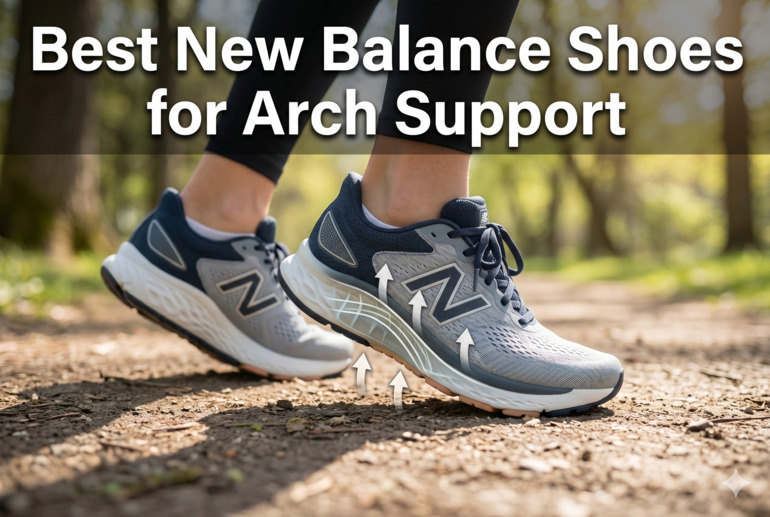
How We Selected the Best New Balance Shoes for Arch Support
Our team spent time evaluating New Balance’s current lineup with a specific focus on arch support, overall foot health, and everyday wearability. We reviewed construction details, midsole technology, and fit data to narrow things down to the five models that deliver where it counts.
Here are the factors that shaped our picks:
- Arch and midfoot structure: We looked for shoes with meaningful internal support systems, not just soft foam. Shank construction, medial posts, and foam density all played a role.
- Cushioning technology: The type of foam used in the midsole matters. We paid close attention to how each shoe handles impact over extended wear, not just the first few steps.
- Fit across foot widths: New Balance’s wide size options are a genuine advantage. We factored in how well each shoe accommodates different foot shapes, including wide and extra-wide fits.
- Weight and flexibility: A supportive shoe shouldn’t feel like a block of concrete. We weighed the balance between structure and natural movement.
- Breathability and upper construction: Foot comfort isn’t just about what’s underfoot. The upper materials affect how your foot sits in the shoe and how well it holds its shape over time.
- Verified performance feedback: We reviewed documented feedback from people who wore these shoes through demanding conditions, from 14-hour shifts to full hiking days.
- Durability and long-term value: A shoe that falls apart in three months isn’t a deal at any price. Build quality and material longevity were part of every evaluation.
Every shoe on this list has been selected because it genuinely earns its place. Here’s what each one brings to the table.
Best New Balance Shoes for Arch Support (Expert Ranking & Review)
The five shoes below cover a range of use cases, price points, and foot types. You’ll find options built for structured stability running, all-day casual wear, premium craftsmanship, and max cushioning comfort. Read each review carefully so you land on the one that fits your specific needs.
1. New Balance 608 V5: The All-Day Workhorse with Genuine Support

The 608 V5 has earned a reputation that’s hard to argue with. It sits at the top of the men’s cross-training category for good reason: it delivers consistent, dependable comfort for people who need to be on their feet all day without thinking about their feet. This is the shoe you grab when you have a 12-hour shift ahead of you or a full day of standing, walking, or moving across hard surfaces.
The core of this shoe’s support system is its ABZORB midsole technology. This isn’t just a marketing term — ABZORB is a cushioning compound that balances softness with compression resistance, which means it doesn’t bottom out after a few hours the way cheaper foams do. There’s also an internal midsole shank running through the midfoot that provides genuine structure, not just the illusion of it.
The leather upper is one of the most underrated features here. Leather holds its shape better than mesh, supports the sides of the foot more reliably, and breaks in to conform to your foot over time rather than stretching out and losing structure. The suede variation gives it a cleaner, more polished look without sacrificing function.
We also found that the dual-density collar foam and minimal-seam Phantom Liner interior make a meaningful difference during extended wear. Less friction means fewer pressure points, and that matters when you’re on hour ten of a long day. The 608 V5 runs true to size and fits well out of the box with zero break-in period needed.
Key Specs:
- Midsole: ABZORB cushioning with EVA foam
- Upper: Leather/suede
- Sole: Rubber outsole
- Closure: Lace-up with eyelets
- Weight: 14 oz
- Fit: Low top, available in wide and extra-wide
- Immediate comfort with no break-in period
- Internal midsole shank provides real midfoot stability
- Leather upper holds shape and supports the foot well
- Dual-density collar foam reduces ankle irritation during long wear
- Not water resistant, so rain and wet surfaces are a limitation
- Slightly bulkier profile than a standard running shoe
2. New Balance Fresh Foam X 1080 V14: Maximum Cushioning for Runners and Long-Distance Walkers
UNAVAILABLEIf the 608 V5 is the workhorse, the Fresh Foam X 1080 V14 is the luxury cruiser. This shoe is built around New Balance’s most cushioned Fresh Foam X midsole to date, and the difference is immediately noticeable. From the first step, the underfoot feel is plush and responsive in a way that’s particularly appreciated by people who log serious miles or spend extended time on their feet in motion.
The Fresh Foam X compound here contains approximately 3% bio-based content, which helps reduce environmental impact without compromising the foam’s performance. The midsole is designed to deliver smooth transitions from heel strike to toe-off, which reduces the repetitive stress that builds up across long runs or walks. This makes it a strong pick for anyone managing plantar fasciitis or general arch fatigue.
Structurally, the 1080 V14 uses a synthetic and engineered mesh upper with no-sew overlays, which keeps the construction lightweight while eliminating the seams that commonly cause irritation. A gusseted tongue locks the foot in place and keeps debris out during outdoor activity. The fit runs true to size and the toe box offers good volume without feeling sloppy.
One important note: the 1080 V14 is a neutral shoe with maximum cushioning but no medial post for pronation control. It’s ideal for neutral foot types or mild overpronators who prioritize softness over firm correction. This shoe also holds the American Podiatric Medical Association Seal of Acceptance, which reflects its value in a consistent foot care routine.
Key Specs:
- Midsole: Fresh Foam X (approximately 3% bio-based content), maximum cushioning
- Upper: Engineered mesh with no-sew overlays
- Sole: Rubber
- Cushion level: Maximum
- Weight: 12 oz
- Platform height: 1.5 inches
- Exceptional cushioning that lasts through long runs and all-day wear
- APMA Seal of Acceptance for foot health
- Lightweight for its level of cushion
- Gusseted tongue for a locked-in fit
- Neutral platform only; not the best choice for significant overpronators
- Some wearers find the softness too pronounced for faster-paced running
3. New Balance Fresh Foam X 860 V13 (Men’s): Structured Stability for Everyday Runners

Where the 1080 V14 leans into pure cushioning, the Fresh Foam X 860 V13 takes a more balanced approach. This shoe is built for the everyday runner who needs both cushioning and meaningful stability, particularly if overpronation is part of the picture. It combines Fresh Foam X midsole cushioning with a 10mm heel-to-toe drop and a structured upper that guides the foot into a more neutral position on each stride.
The breathable engineered mesh upper is structured enough to hold the foot in place without feeling rigid. Reflective accents along the upper add visibility during early morning or evening runs, a small detail that matters more than people often realize. The internal gusseted tongue keeps the shoe from shifting during activity and prevents debris from working its way inside.
We found this shoe performs particularly well for runners who are on their feet for extended periods and need a shoe that won’t break down its support structure after the first few hundred miles. At 245 grams (approximately 8.6 oz for the men’s version), it’s light enough to feel agile without feeling unsupported. The 27mm platform height gives a meaningful layer of protection between your foot and the ground.
The 860 V13 is a go-to for anyone who has tried pure cushion shoes and found they felt too soft or unstable underfoot. The combination of Fresh Foam X and the structured build creates a firmer, more controlled ride that serious daily runners tend to prefer over long training blocks.
Key Specs:
- Midsole: Fresh Foam X with stability structure
- Upper: Structured engineered mesh
- Sole: Rubber
- Heel-to-toe drop: 10mm
- Platform height: 27mm
- Weight: 245g (approx. 8.6 oz)
- Structured stability platform corrects mild to moderate overpronation
- Lightweight for a stability shoe
- Reflective accents for low-light visibility
- Holds up well over extended mileage
- Toe box runs narrower than some competing stability shoes
- Not ideal for those who need maximum cushion softness
4. New Balance Made in USA 990 V6: Premium Craftsmanship with All-Day Comfort

The 990 V6 occupies a different category from the other shoes on this list. It’s not just a performance running shoe — it’s a premium lifestyle sneaker that takes the iconic 990 silhouette and brings it fully into the modern era with legitimate performance technology underneath. The FuelCell foam midsole, which New Balance typically reserves for its performance racing line, delivers a propulsive, energized feel that makes every step feel intentional.
What sets the 990 V6 apart from most arch support shoes is the pairing of FuelCell foam with ENCAP midsole technology. ENCAP combines lightweight foam with a polyurethane rim around the perimeter of the midsole, creating a structure that absorbs impact while maintaining its shape over time. This is the kind of cushioning that doesn’t just feel good on day one — it keeps performing after months of regular use.
The upper is built from pigskin suede and breathable mesh, giving the shoe a premium look that holds up across casual wear, commuting, and light athletic activity. The construction is done domestically with a minimum 70% U.S.-based value, which reflects a level of craftsmanship that’s evident in how the shoe feels and fits. It runs true to size and is available in multiple widths, making it genuinely accessible for people with wider feet.
Key Specs:
- Midsole: FuelCell foam with ENCAP technology
- Upper: Pigskin suede and mesh
- Sole: Rubber
- Closure: Lace-up with traditional eyelets
- Weight: 16 oz
- Origin: Made in USA (70% or more domestic value)
- FuelCell and ENCAP combination provides lasting, responsive cushioning
- Premium suede and mesh upper with quality craftsmanship
- Available in multiple widths including extra-wide
- Higher price point than most shoes in this category
- Lacing system requires careful adjustment for optimal comfort
5. New Balance Fresh Foam X 860 V13 (Women’s): Stability-First Running for Everyday Miles

The women’s version of the Fresh Foam X 860 V13 carries the same stability-forward DNA as the men’s edition but is built specifically around a women’s last for a more precise fit. This matters more than it might seem. A shoe built to the geometry of a women’s foot sits differently, flexes differently, and provides a more accurate level of support than a simply scaled-down men’s shoe.
The Fresh Foam X midsole delivers maximum cushioning while the medial post built into the midsole provides the pronation control that overpronators need. For women dealing with flat feet or plantar fasciitis, this combination addresses two problems at once: the foam absorbs impact so your joints don’t have to, and the structure corrects the inward roll that causes arch strain over time. The 10mm drop puts the heel in a slightly elevated position that takes tension off the Achilles tendon during activity.
The engineered mesh upper is structured but breathable, with a 50/50 synthetic and mesh construction that keeps the shoe light without sacrificing durability. Reflective accents improve visibility during outdoor runs at dawn or dusk, and the internal gusseted tongue keeps the fit secure without additional adjustment mid-run. Sizing runs slightly small, so going up half a size is a wise call for most wearers.
This shoe stands out in our lineup as the clearest choice for women who run regularly, overpronate, or have had trouble finding a shoe that addresses both cushioning and correction without feeling heavy or stiff.
Key Specs:
- Midsole: Fresh Foam X with medial post stability
- Upper: 50% synthetic, 50% engineered mesh
- Sole: Rubber
- Heel-to-toe drop: 10mm
- Cushion level: Maximum
- Weight: 0.26 kg (approx. 9.2 oz)
- Women’s-specific last for accurate fit and support
- Medial post addresses overpronation effectively
- Breathable yet structured upper holds up over long distances
- Reflective accents for visibility during outdoor runs
- Runs slightly small; sizing up is recommended
- Narrower toe box may not suit wider forefoot shapes
Best New Balance Shoes for Arch Support: A Quick Rundown
- New Balance 608 V5 — Best for all-day wear and long shifts on hard surfaces
- New Balance Fresh Foam X 1080 V14 — Best for maximum cushioning and neutral foot types
- New Balance Fresh Foam X 860 V13 (Men’s) — Best structured stability shoe for male everyday runners
- New Balance Made in USA 990 V6 — Best premium lifestyle sneaker with performance-grade cushioning
- New Balance Fresh Foam X 860 V13 (Women’s) — Best stability running shoe for women with overpronation
Final Thoughts
Arch support isn’t a single feature — it’s a combination of midsole foam density, internal structure, fit accuracy, and how all of those elements work together over time. The right shoe for plantar fasciitis looks different from the right shoe for a nurse on a 12-hour shift, which looks different again from what a daily runner needs for a 40-mile training week. Knowing what your feet are actually dealing with is the first step toward choosing something that genuinely helps.
Whatever your situation, prioritize the right fit over the lowest price. A shoe that fits correctly and supports your specific arch type will outlast and outperform any shoe that checks one box but misses the others. Take your time, match the technology to your foot type, and choose the option that fits your life — not just your budget.